
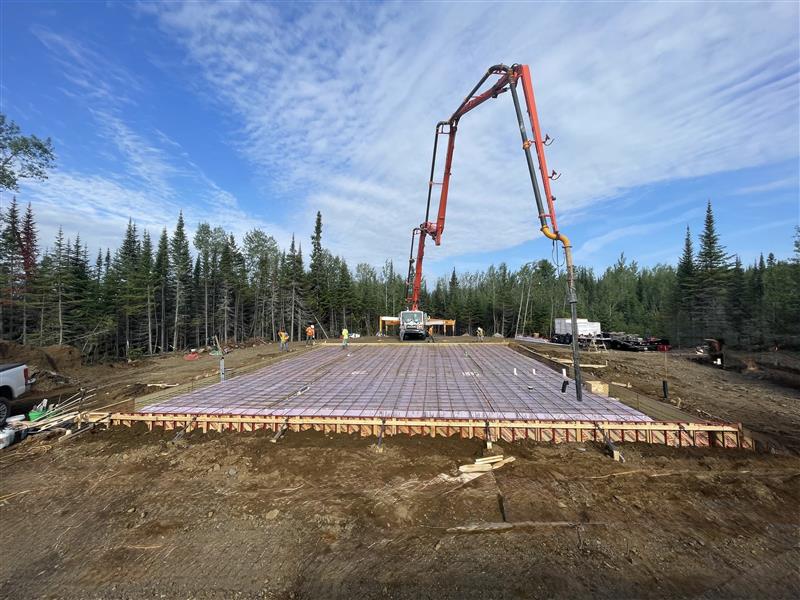
A Winter Coat for Your Foundation
If you’ve ever driven by a job site in Duluth or up the North Shore and seen thick blue or pink foam sheets under a concrete slab, you might wonder why they’re there. They’re not for packaging or comfort during construction. They serve an important purpose, especially in colder climates like ours. That’s construction foam, and it plays a big role in protecting foundations from Minnesota’s long winters and shifting soil.
Using construction foam under foundations is one of the best ways to keep buildings stable, energy-efficient, and long-lasting in a region where frost can reach down four feet or more. At Kaski Inc., we’ve made this a standard part of how we build for the Northland.
Fighting Off Frost Heave
One of the biggest reasons we use foam beneath a foundation is to protect against frost heave. When the ground freezes and thaws, it expands and contracts. That movement puts pressure on concrete slabs from underneath. Over time, this can lead to cracks, uneven floors, or damage to the structure above.
Construction foam helps create a thermal barrier between the foundation and the cold ground. Instead of allowing freezing temperatures to creep up into the slab, the foam slows that transfer. The result is a more stable base, less ground movement, and a longer-lasting foundation that holds up season after season.
Energy Efficiency from the Ground Up
For heated buildings, construction foam also adds another layer of value—insulation. Warm air doesn’t just escape through walls and windows. It also tries to leak out through the floor. By placing foam beneath the slab and around the perimeter, we keep more of that heat where it belongs.
This is especially noticeable in buildings with in-floor radiant heating. The foam keeps the warmth from leaching down into the soil, so the energy goes into heating the space, not the ground. That can lead to real savings on heating costs, which makes a difference during our six-month heating season in northern Minnesota.
Not Just for Heated Slabs

For heated buildings, construction foam also adds another layer of value—insulation. Warm air doesn’t just escape through walls and windows. It also tries to leak out through the floor. By placing foam beneath the slab and around the perimeter, we keep more of that heat where it belongs.
Even when a building doesn’t have in-floor heat, using construction foam under foundations still makes sense. Garages, shops, storage buildings, and other unheated or minimally heated structures benefit from better protection against frost heaves and temperature swings. Foam acts as a buffer between the ground and the slab, reducing the stress caused by freeze-thaw cycles and preventing long-term wear and tear.
We often use foam in these types of builds, not because it’s required, but because it simply works. It helps the structure stay in place, reduces cracking, and contributes to the overall durability of the foundation. In our climate, that kind of protection is worth it.
Built for Our Climate and Codes
The foam we use isn’t just any insulation. It’s rigid, closed-cell foam designed to carry the weight of a building and resist moisture. Most often, we use extruded or expanded polystyrene (XPS or EPS), which is made for ground contact and long-term durability.
In many areas of Minnesota and Wisconsin, building codes now require foundation insulation for heated buildings. But even when it’s not required, we recommend it. In a climate like ours, where the soil never quite stays still, it’s a smart investment in a structure’s future.
A Foundation That Lasts
We’ve installed construction foam under foundations for everything from our own Kaski headquarters to residential projects. Whether we’re building a shop on the Iron Range or a pavilion near the lake, the foam helps keep our concrete stable and our clients comfortable.
It’s easy to overlook what goes beneath a building. After all, once the slab is poured, you don’t see it anymore. But that hidden layer of foam is one of the best tools we have to protect a structure from the ground up. It’s how we build smarter for our climate and for our community.

As some of our crew found out after hours. Not only can XPS support the weight of buildings, but also the weight of intense chess matches.
