Concrete has great strength under compression, yet it cracks under tension. Adding rebar changes that. Rebar, or reinforcing steel, gives structural concrete the tensile strength it lacks. That control over cracking and added durability makes rebar essential in foundations, walls, and especially tilt-up construction.
Why Rebar Matters in Structural Concrete
Concrete resists compressive forces but fails under tension. Steel bars solve this – adding tensile strength and helping concrete handle loads, shifts, and environmental forces. Since steel and concrete expand and contract at similar rates when temperatures change, rebar and concrete move together, reducing stress at the interface
Rebar also prevents crack propagation. The right placement of rebar in foundations or walls means that small cracks do not grow into structural failures. Well-placed rebar, with correct spacing and cover, also resists corrosion and maintains long-term integrity.
Another key reason rebar works so well with concrete is the ribbed surface along each bar. These raised patterns, also called deformations, aren’t just for looks. They’re engineered to create a mechanical bond with the surrounding concrete, helping the two materials lock together. As the concrete cures and shrinks slightly, it grips those ribs, allowing the steel to resist being pulled or shifted under tension. Without those ribs, smooth bars could slip inside the concrete, especially under load or during freeze-thaw cycles. This mechanical interlock is what makes reinforced concrete act as a single, unified structural system.
Sometime smooth rebar is still needed. While we try to pour slabs as one to help with overall shrinkage and quality. projects can often be too large or have non favorable conditions. When this happens and we need construction joints (where two slabs are joined). Smooth dowels allow both pieces to stay joined to each other but also slide as needed to keep them from cracking.
Rebar Grades and Sizes: Why They Matter
When working with structural concrete, not all rebar is created equal. One of the most commonly used standards in construction is ASTM A615 Grade 60, which offers a yield strength of 60,000 psi. This grade provides dependable performance for a variety of applications, including foundations, floor slabs, and tilt-up wall panels. For projects that require welding, contractors may specify ASTM A706, which is a weldable reinforcing bar designed to handle the thermal demands of the process without compromising structural integrity. Choosing the right grade ensures the steel performs under load and continues to work with the concrete over the life of the structure. At Kaski Inc., we typically use Grade 60 rebar in most of our work.
The size of rebar, often referred to by bar number (like #4, #6, or #8), directly affects the strength and load-carrying capacity of reinforced concrete. Each bar number corresponds to an eighth of an inch in diameter. For example, a #4 bar is ½ inch thick, while a #8 bar is a full inch. Larger bars provide more strength but are also stiffer and harder to bend, so they’re typically used in structural elements like footings, columns, and heavy-duty wall panels. We often use a mix of sizes depending on the project. For example, in our tilt-up wall panels, we might use #4 or #5 bars for standard grid mats and step up to #6 bars around lifting inserts, openings, or high-stress areas. Getting the size right is key; it balances strength, spacing, and constructability to ensure the steel and concrete work as one.
Rebar Spacing, Cages, and Mats
Beyond grade, spacing plays a critical role in rebar performance. If bars are spaced too closely together, it can prevent concrete from flowing properly during a pour, leading to voids or honeycombing. If they are too far apart, the concrete can crack or deform more easily under stress. Standard practice suggests spacing rebar at a distance equal to five to ten times the diameter of the largest aggregate used in the mix—or as specified by a structural engineer.
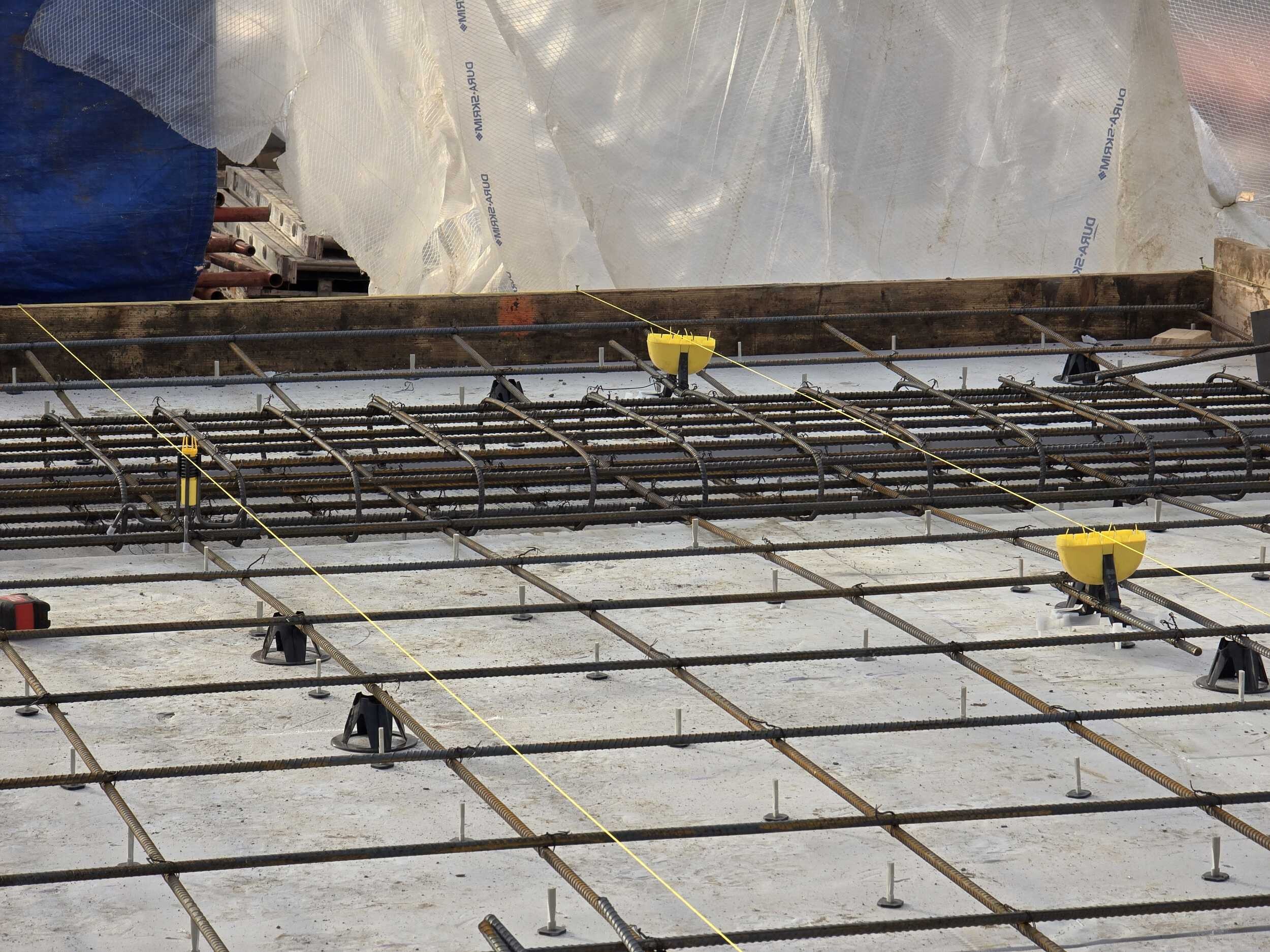
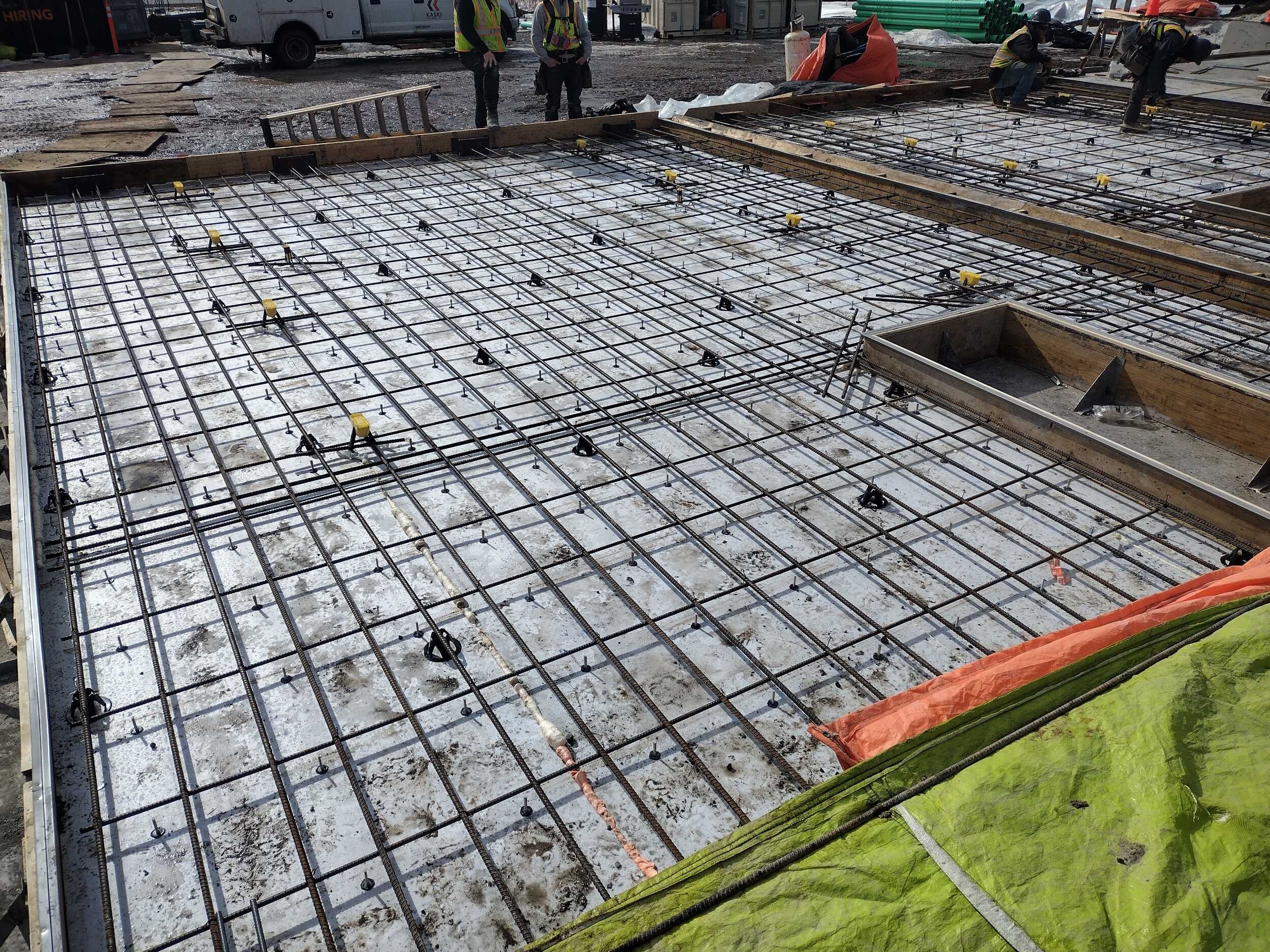
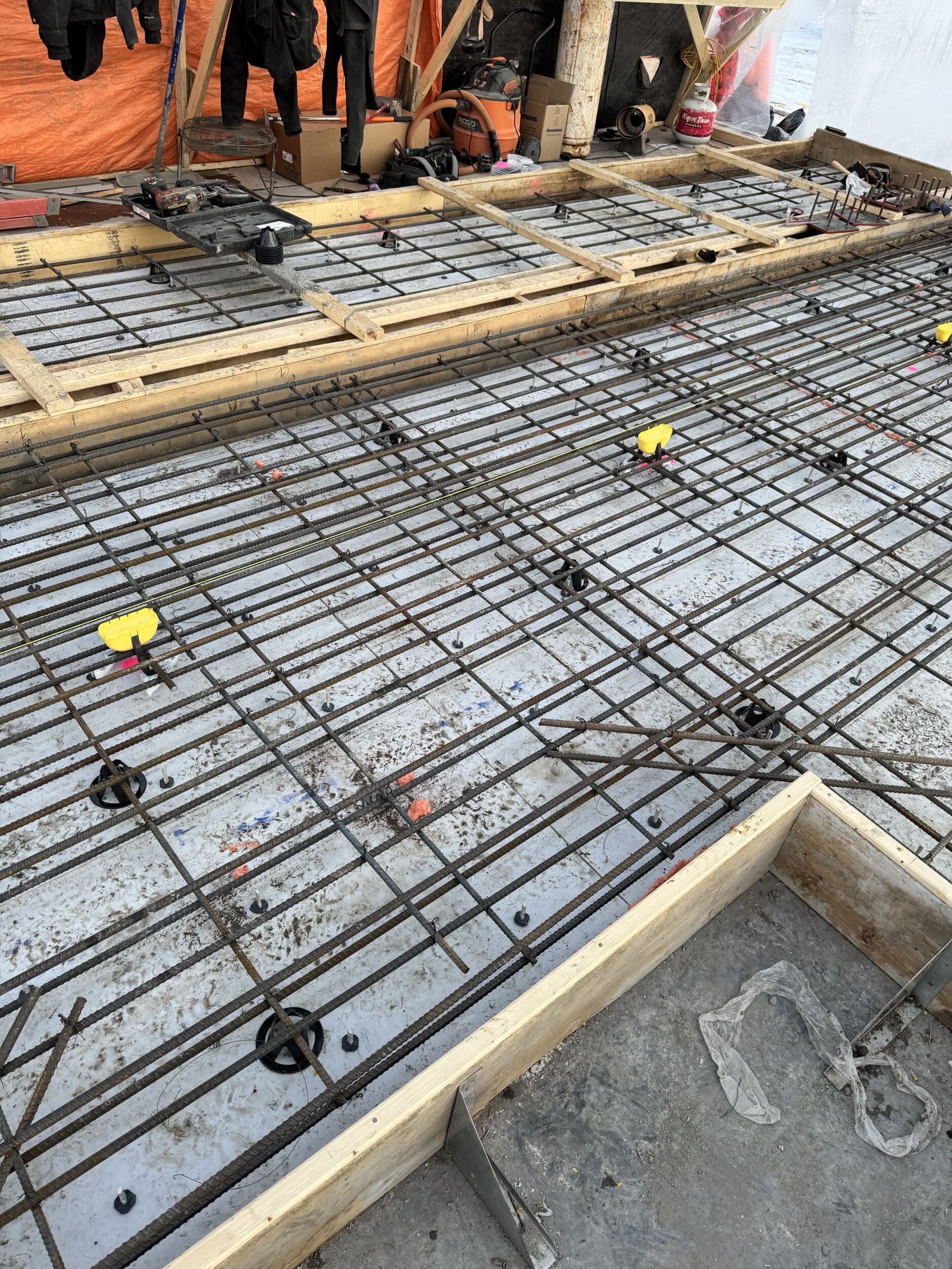
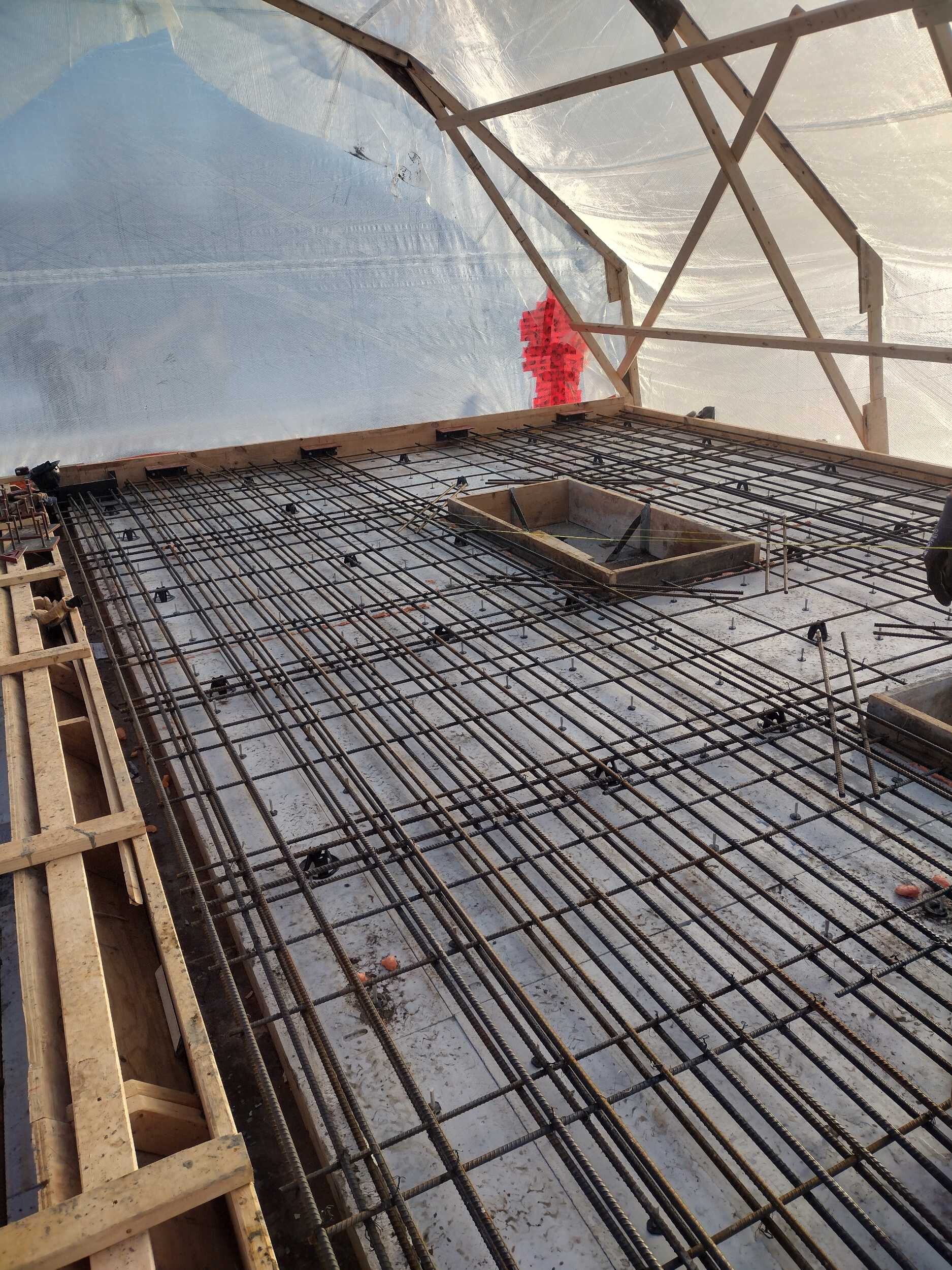
To create a complete reinforcement system, we use either rebar mats or cages, depending on the application. Mats are typically flat grids used in slabs and wall panels. Cages are more three-dimensional and are built for columns, piers, or other structural elements with depth. These systems are assembled on-site using tie wire to hold the bars in position during the concrete pour. Properly tied cages ensure that reinforcement stays in place and maintains the designed spacing, which is critical for structural integrity. Poor tying, or skipping ties altogether, can lead to slippage or misalignment during the pour, undermining the strength of the final structure.
Tying vs Welding Rebar
Contractors typically tie rebar using wire. Tying keeps the steel cool. That preserves its mechanical properties and avoids structural issues that heat from welding could cause. Welding rebar requires stringent controls, preheat, proper filler, and use of weldable bar types such as ASTM A706. In almost every case, rebar mats are tied either by hand or with automated tying tools. At Kaski, we use the RB441T to boost the efficiency of our crews and to get the job done right.
In prefabricated rebar mats or cages, welding may help maintain exact spacing during transport. Welds make the assembly rigid. But they require careful design and need codes that permit welding on reinforcing bars, NPCA.
Rebar in Kaski Inc. Tilt-Up Wall Panels
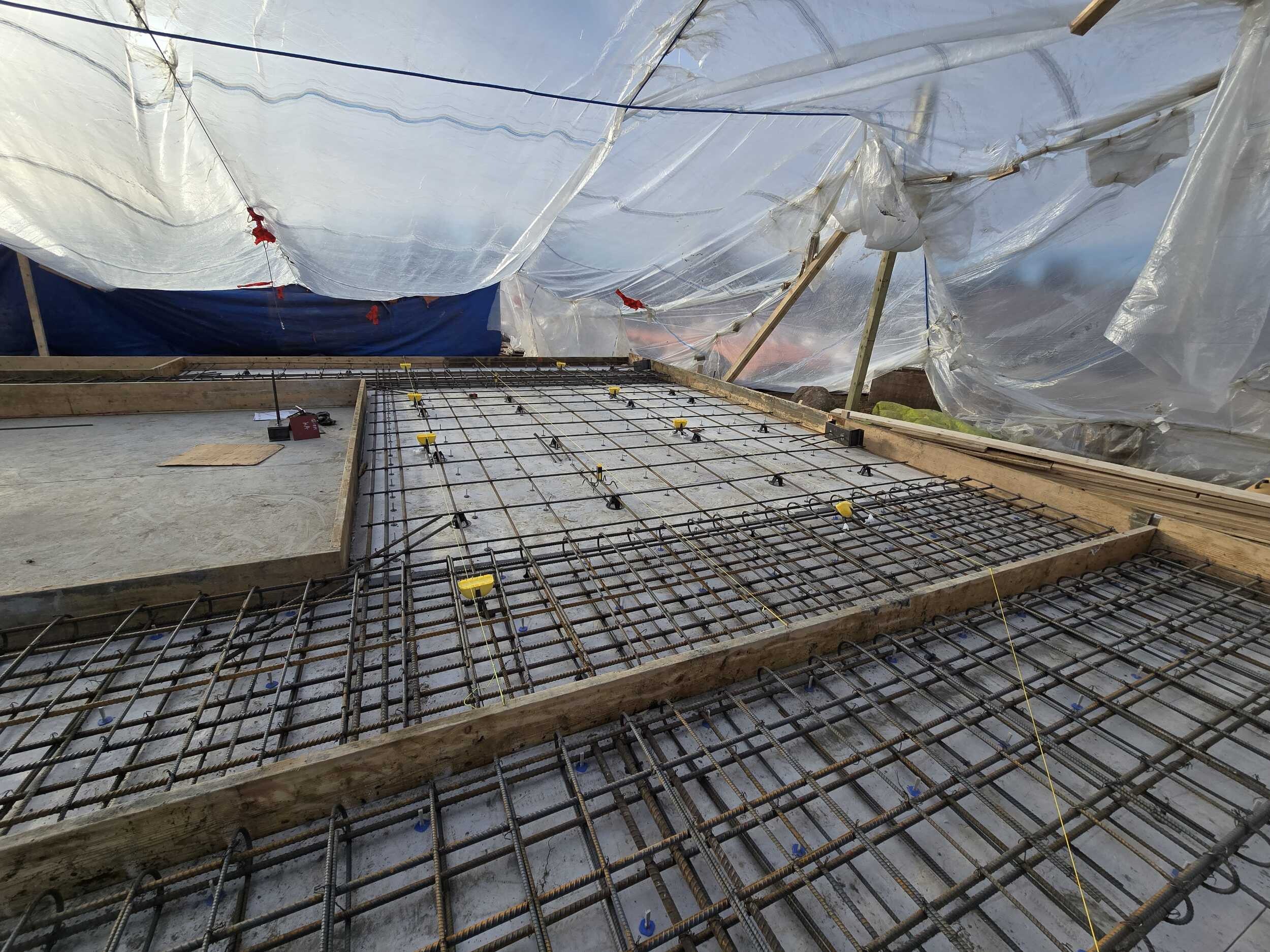
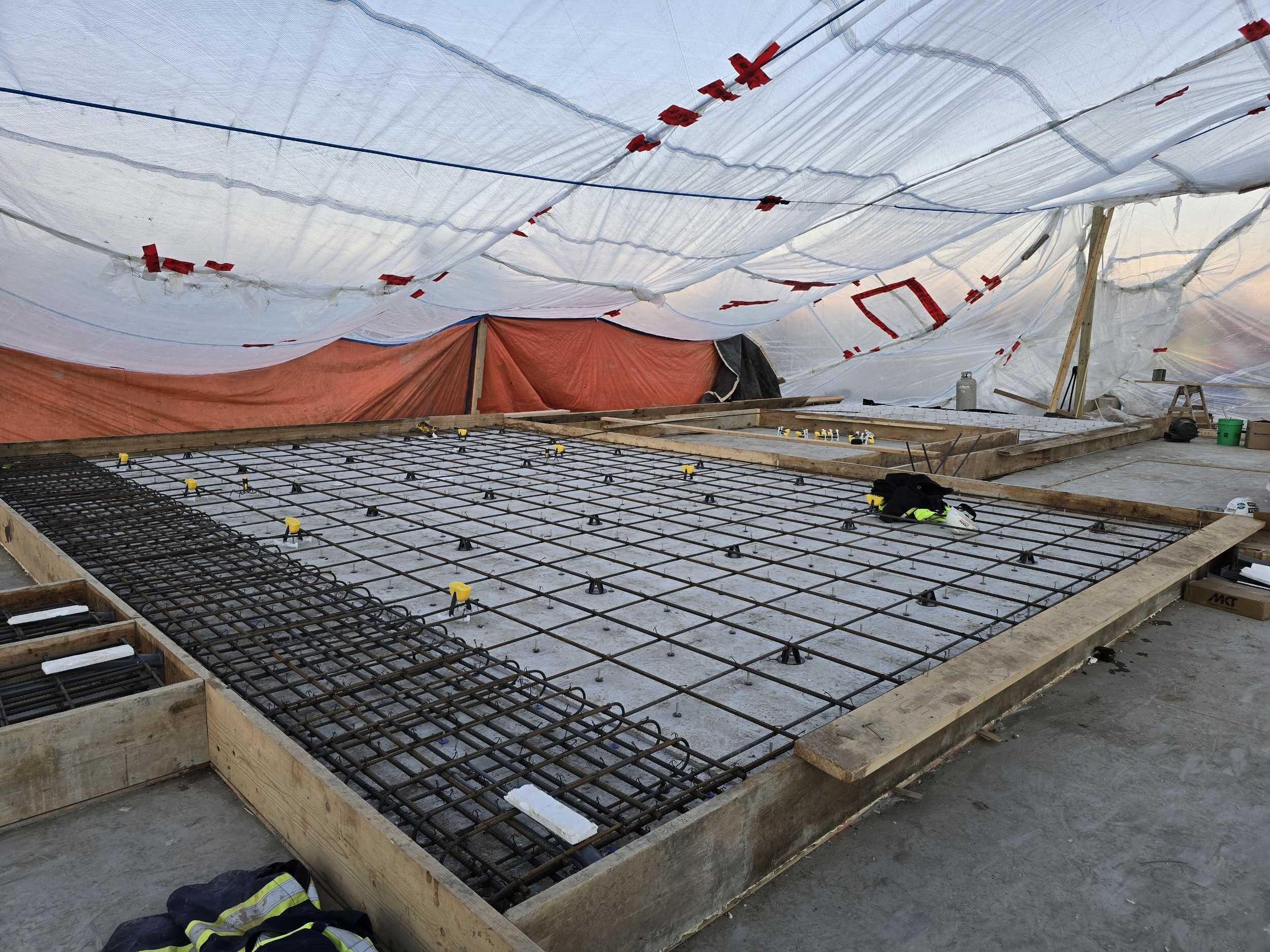
At Kaski Inc., we pour tilt-up concrete walls with extensive rebar mats in each panel. For example, panels include both vertical and horizontal bars per structural design. We used a mix of 4 to 5-layer mats, cages with bent hoops, or both in combination.
At our new facility, each panel was engineered specifically to meet the structural requirements for that individual wall. With tighter mats, a larger bar, or additional reinforcement around openings and lifting points. All the bars and cages were built onsite, using local labor and suppliers, before pouring panels. We follow ACI guidance and the Tilt-Up Concrete Association’s standards to ensure safe lifting loads, wind resistance, and crack control.
After the panels cure, those reinforced mats give the tilt-up walls structural integrity across height and width. The reinforcement controls bending, resists lateral wind, and limits shrinkage cracks.
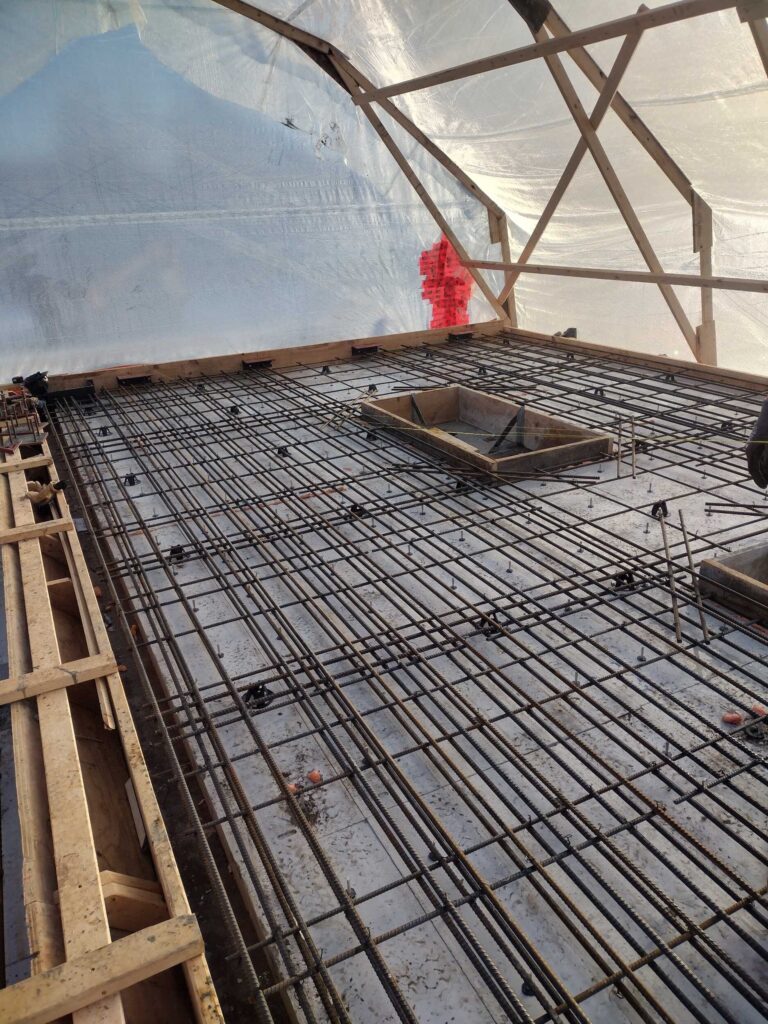
Here are some of the different mats that are on the walls. You can see that no two are alike.
Closer to the Surface: Rebar Cover and Supports
Concrete quality depends on the bar cover, too. The cover keeps steel away from surface moisture and corrosion risk. We typically use plastic or steel bar chairs to set the cover height precisely. That assures concrete flows beneath and around the steel without voids.
In a lot of the DNR projects that we have completed, we used epoxy-coated rebar. The easily recognizable green coating gives an extra layer of protection to the steel. It helps fight off water and corrosion, improving the longevity of the concrete.
In Summary
Structural concrete needs rebar to handle tension, control cracking, and maintain long-term strength. Rebar grade and spacing matter. Proper mats and cages, tied or welded correctly, support design loads. In Kaski Inc tilt-up panels, we install extensive rebar mats to deliver walls that resist bending, wind, and shrinkage. This attention to reinforcement makes our concrete construction durable and dependable across northern Minnesota’s climate.