
“What good is the warmth of summer, without the cold of winter to give it sweetness?”
-John Steinbeck
Anyone who has spent a season in northern Minnesota knows that winter does not wait for construction schedules. Work continues even as the frost settles deep into the ground and the lakes harden over. Concrete crews feel this reality more than most. It is not ideal to pour concrete in the cold, but schedules for commercial buildings, utilities, and site development often stretch straight through the winter months. When done with care and planning, winter concrete can perform every bit as well as a summer pour, and in this region, it is simply part of the job.
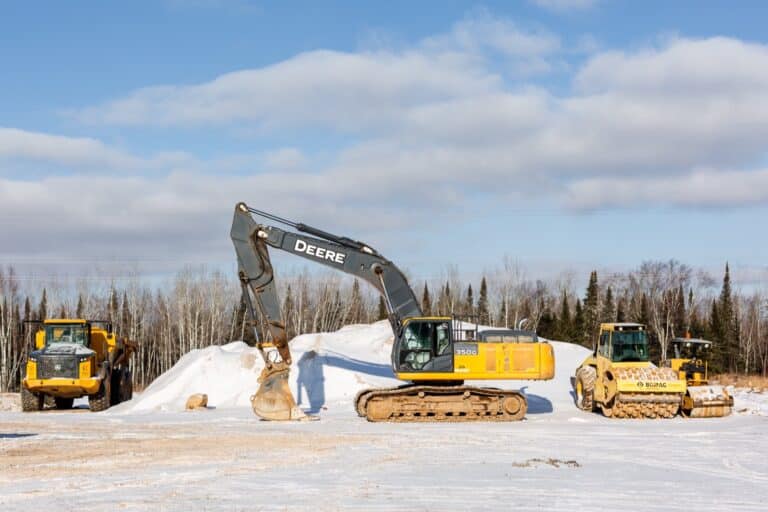
Frozen ground is one of the most common obstacles in winter work. Concrete should never be placed on frozen soil or frozen reinforcement because it cannot bond to material that will change shape as the frost later thaws. A footing or slab placed on cold, rigid frost can settle unevenly in spring and affect a structure before its first year of service. Crews spend hours or days warming the ground using insulated blankets, heated enclosures, or hydronic systems that circulate warm glycol through long loops of hose. These systems heat the soil slowly and evenly, which prevents uneven thawing. By the time the concrete arrives, the ground must feel alive again rather than locked in winter.
The concrete mix itself is also adjusted for winter conditions. Batch plants heat the mix water and aggregates so the concrete arrives at the site with enough internal warmth to begin hydrating properly. Admixtures are sometimes added to promote early strength development. These products do not shortcut the process but help the concrete build enough internal heat to resist freezing. Deliveries are timed carefully because even the warmth gained during mixing can be lost quickly if trucks are delayed or the site is not ready.
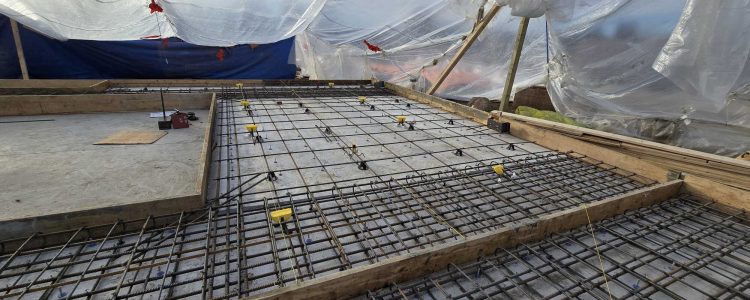
Preparing the tools and forms may seem simple, but it is one of the quiet details that make winter concrete successful. Any frost on a screed, a steel form, a rebar mat, or even a set of anchor bolts can change the way concrete bonds to these materials. Crews store tools in heated trailers, warm their finishing equipment, and keep forms clean and dry before the pour. In this cold region, small oversights can become structural problems later, so every detail is treated with care.
The human side of the operation matters just as much. Winter concrete asks more from the crew than a warm day ever will. Workers need warm gear, safe footing, and a place to step inside and recover between tasks. Finishing work requires dexterity, and cold hands lose that ability quickly. A well-supported crew maintains consistent quality, and the morale of the team plays a real role in tight, cold weather placements. Heated break areas and warm shelters are not luxuries in this climate. They are part of the production plan.
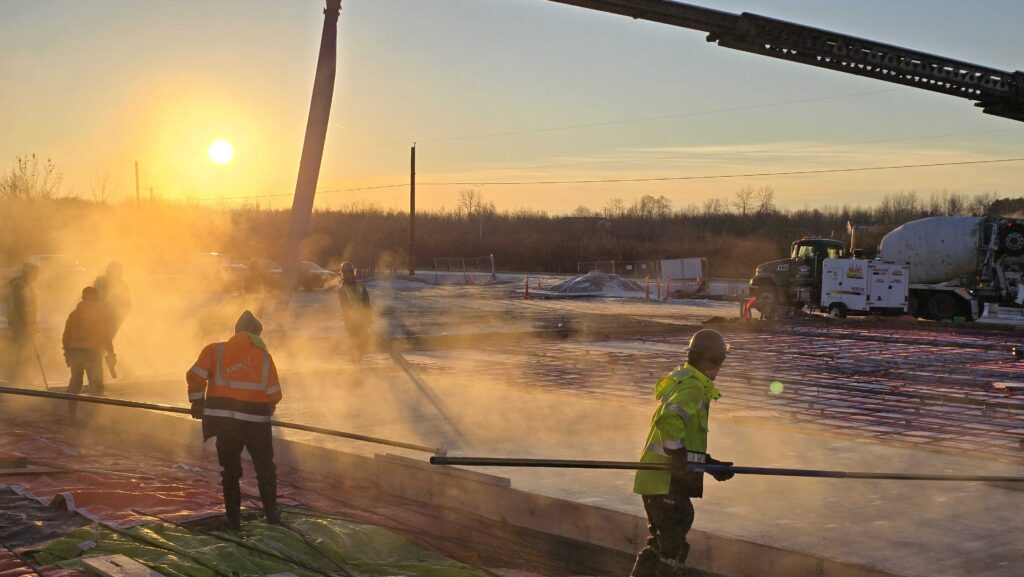
During placement, everything moves with a steady rhythm. Concrete is placed efficiently so its temperature does not fall too quickly, and communication across the crew becomes more important than ever. Screeding, bull floating, edging, and finishing all need to happen in a continuous flow. Cold air can tighten the surface faster than expected, so the crew must adjust their timing based on feel as much as on routine. Winter teaches finishers to pay close attention to the surface and to trust their experience rather than wait for certain visual cues that only appear in warm weather.
Curing is where winter concrete succeeds or fails. After the finishers leave the surface, the slab enters a period of vulnerability. It must be protected from freezing until it achieves enough strength to stand on its own. Contractors wrap slabs in insulated blankets, build temporary enclosures, install heaters, or continue running hydronic systems beneath or around the concrete. The goal is simple: keep the concrete above freezing long enough for it to gain the strength required by the engineer. Crews monitor temperatures with sensors or surface readings to ensure the slab is performing as expected. Winter concrete takes longer to cure, and schedules reflect that reality.
For larger commercial slabs, hydronic systems are sometimes built directly into the pour. Tubes carrying heated glycol warm the concrete from within and create a predictable curing environment even when outside temperatures fall sharply overnight. This practice has become more common on big projects where consistent curing is essential.
Every step in winter concreting adds time, cost, or labor. The work is slower, and the weather rarely cooperates for long. There is more fuel consumption, more handling of materials, more planning, and more safety considerations for the crew. These are not flaws. They are simply the realities of working in a northern climate.
Winter is not the ideal season for concrete work, but it is part of building in northern Minnesota. Contractors who specialize in this region understand that success comes from preparation, warm materials, a supported crew, and a curing plan designed for cold weather. When these pieces come together, winter concrete can meet the same standards and deliver the same long-term durability expected from any commercial project, regardless of the season.
