
Common Signs Your Concrete Needs Attention
You do not have to wait for a slab to crumble before taking action. Catching problems early helps keep repair costs down. Some signs that commercial concrete needs attention include: Cracking that gets wider over time, especially if it occurs in patterns tracking traffic flow,Surface scaling where the top layer of concrete flakes or peels under traffic and weather, Spalling where chunks break loose, creating uneven surfaces and trip hazards, Areas that feel soft, chalky, or worn deeper than surface wear.
Freeze-thaw cycles are a major factor in deterioration here in the Northland. When water enters concrete and freezes, it expands and creates internal pressure. Repeated cycles accelerate cracking and surface breakdown unless the concrete is designed to resist these conditions, such as by adding proper air entrainment and selecting mixes based on anticipated exposure class as outlined in ACI 318 durability requirements. For exposure categories involving severe freeze-thaw and deicing salts, ACI 318 sets specific design and mix criteria including lower water-cement ratios and enhanced concrete strength to resist deterioration.
Other signs like depressions, rutting, or uneven slabs often point to base failure below the concrete. If water cannot drain properly or the subgrade was poorly prepared, traffic loads can shift and settle the slab from below.
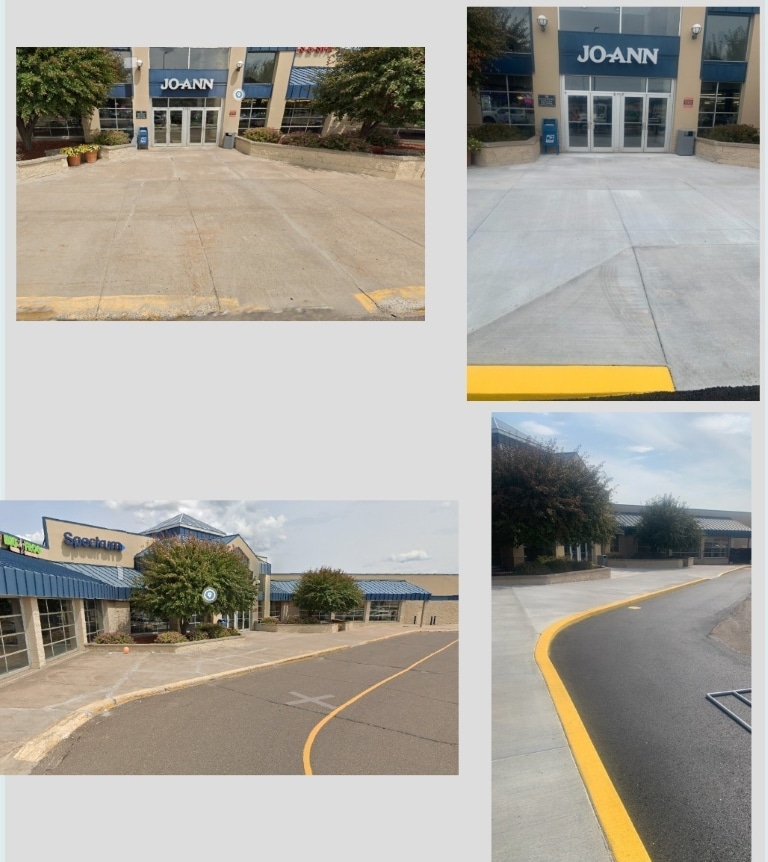
Repair Methods That Work for Commercial Concrete
Not every problem needs replacement. There are proven methods to restore worn concrete surfaces and extend life.
One common approach is patching and resurfacing. In a patch repair, crews remove cracked or delaminated concrete down to sound material. Then they place high-strength repair concrete or polymer-modified mortar that bonds effectively with the existing slab.
Joint and crack repair can prevent water infiltration that leads to deeper damage. Techniques include routing cracks to a consistent width and depth before filling them with epoxy or polyurethane sealants.
For larger distressed surfaces, grinding or milling can smooth uneven spots and restore proper drainage slope without removing full sections of concrete.
In more advanced commercial scenarios, engineered structural overlays replace only the top portion while tying into sound underlying concrete. The American Concrete Institute’s standards like ACI 562 provide an industry framework for repair design, assessment, and rehabilitation of existing concrete to help ensure repairs achieve durable performance and meet code expectations.
When Concrete Needs Replacement
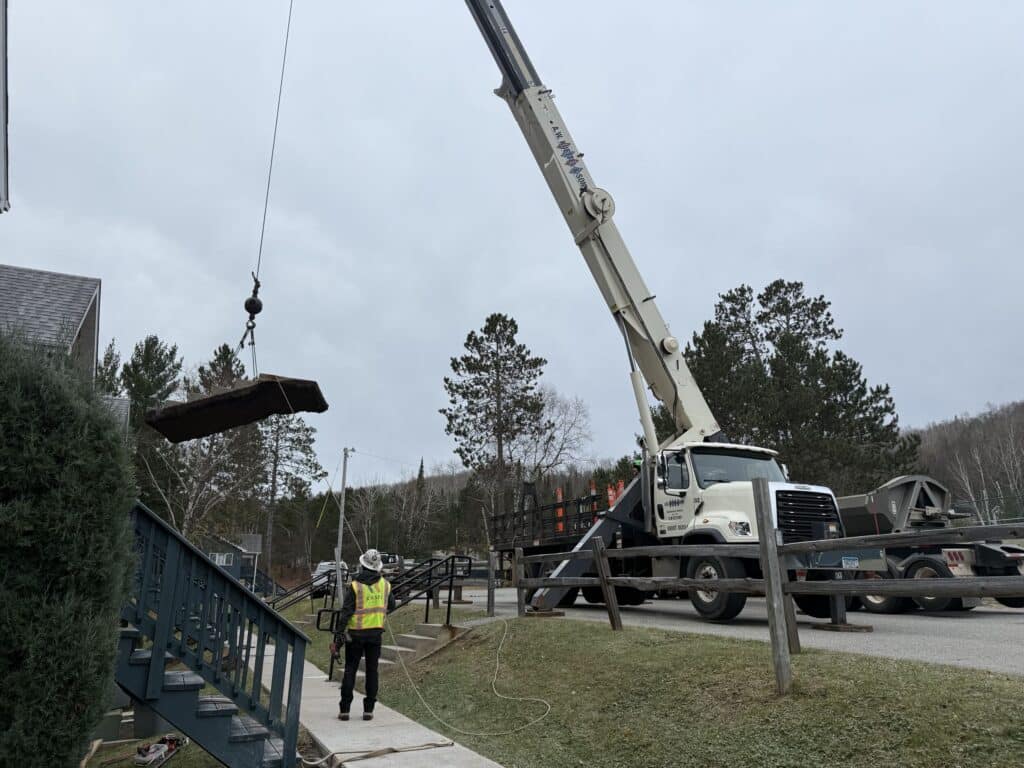
Some conditions go beyond repair. Large slabs that show extensive cracking, deep settlement, or slabs that have failed at the base require full replacement. When subgrade support fails, soil washes out, or the slab cannot support load patterns without repeated patching, replacement helps ensure performance and safety.
Corrosion of embedded reinforcing steel (rebar) can also drive the need for replacement. When water and deicing chemicals reach steel within the slab and corrosion expands the bars, cracking and spalling can spread quickly from the inside out. In these cases, removal and replacement with proper subgrade correction and drainage are often the best long-term strategy.
Understanding Concrete Life Cycles at High-Traffic Sites
Concrete does not go from good to bad overnight. Its life cycle depends on design, mix quality, compaction, finishing, and site conditions.
Concrete exposed to heavy loads, repeated turning motions, fuel spills, and freeze-thaw cycling goes through expansion and contraction stress every year. Fresh concrete must achieve proper strength and air-void structure to resist freeze-thaw damage, per ACI durability guidance.
Drainage and subgrade support matter just as much as surface quality. Water that pools in low spots infiltrates cracks, accelerates freeze-thaw damage, and carries salts and chemicals deeper into the slab. Designing slabs with proper slope to drainage and ensuring good base compaction help concrete last longer.
Replacing Concrete While Keeping Business Moving
One big concern for commercial property owners is downtime. Business owners want work completed while customers still have safe access. This takes thoughtful planning.
Phasing work so sections are replaced one at a time helps keep entrances and pump lanes active. Work can be scheduled overnight or during slower business hours. Temporary access routes and clear signage protect customers and crews.
Effective coordination with suppliers, subcontractors, and inspectors ensures concrete pours, curing, and traffic restoration happen quickly. For example, specifying higher early-strength concrete mixes or warm curing methods such as insulating blankets or heated enclosures can get sections open for traffic sooner while still developing strength. Industry guidance like ACI 306.1 details how to manage concrete performance in cold conditions to reduce damage and downtime.
How to Make Commercial Concrete Last Longer
Concrete requires ongoing attention if it is to meet its potential life expectancy. Simple maintenance extends life and reduces the need for major work later: Keep drains and joints clean so water cannot pool, Reseal joints and surface coatings regularly to deter moisture and chemical penetration, Watch for and repair small cracks promptly before they widen, During winter, use proper snow removal techniques that do not damage the surface.
Concrete designed and built for your specific exposure conditions also performs longer. Choosing the right mix, reinforcing correctly, and placing concrete in adherence with best practices helps protect investment from day one.
Lasting Solutions, Not Band-Aids
At Kaski Inc., we assess concrete issues with the goal of lasting solutions rather than short-term fixes. We determine the root causes of deterioration, whether it is poor drainage, base failure, freeze-thaw damage, or reinforcement corrosion, and recommend repair or replacement strategies that will serve our clients for years.
We also plan work so businesses can operate throughout repairs and replacements. That means thoughtful phasing, clear communication, and craftsmanship that reflects real conditions here in northern Minnesota.
Concrete supports your business every day. With the right repair and replacement strategy, it can keep supporting you well into the future.
